
From Sky to Stay
From Sky to Stay: The Incredible Journey of the Aeroplane
For centuries, humanity has looked to birds and dreamed of the impossible. Now, not only do we fly across oceans in hours, but we also sleep, dine and celebrate inside the very machines that once conquered the clouds.
At Twin Jets Resort, we are passionate about the history of aviation. To understand why staying in a Boeing 727 is so special, we must look back to when a wooden and fabric glider paved the way for the comfortable suites you see in Broga today.
The Spark of Genius: How the First Aircraft Was Invented
The dream took flight on 17 December 1903 at Kitty Hawk in North Carolina. Orville and Wilbur Wright didn’t just build a machine; they solved the three-dimensional puzzle of flight: lift, propulsion and control.
Their aircraft, the Wright Flyer, was a biplane made of spruce wood and muslin. While others focused on sheer power, the Wright brothers used “wing warping” (the precursor to modern ailerons) to balance the aircraft. That first flight lasted only 12 seconds and covered just 37 metres, but it changed the world forever.
The Golden Age: The Evolution of the Commercial Giant
In the decades following the events at Kitty Hawk, aircraft evolved from fragile scouting machines into the workhorses of global travel. The post-war boom saw technology shift from propellers to jet engines.
The Boeing Legacy
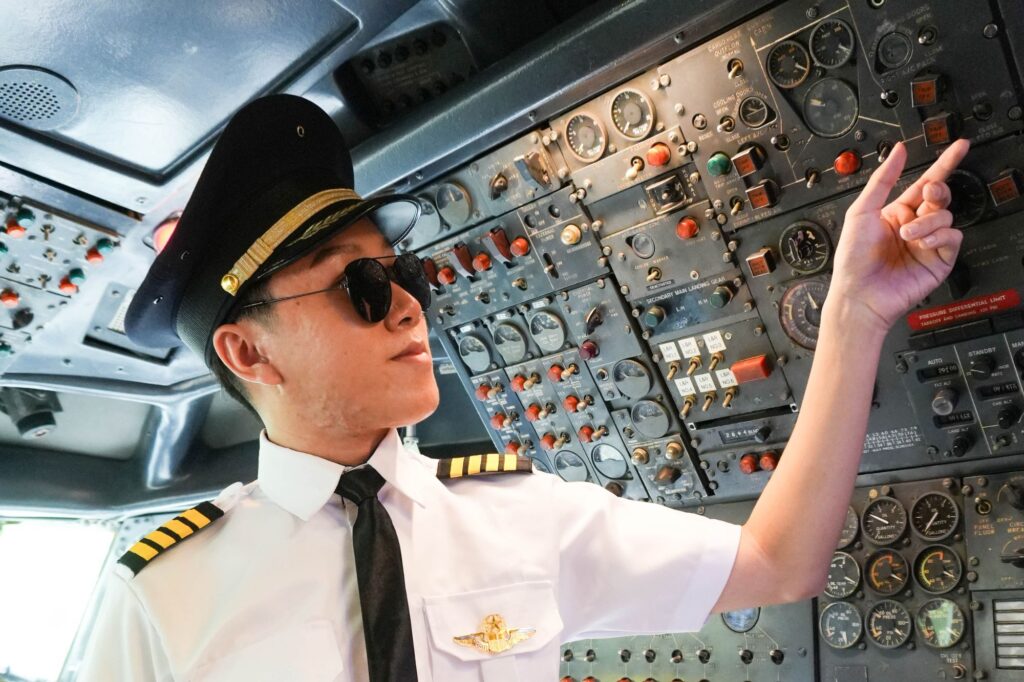
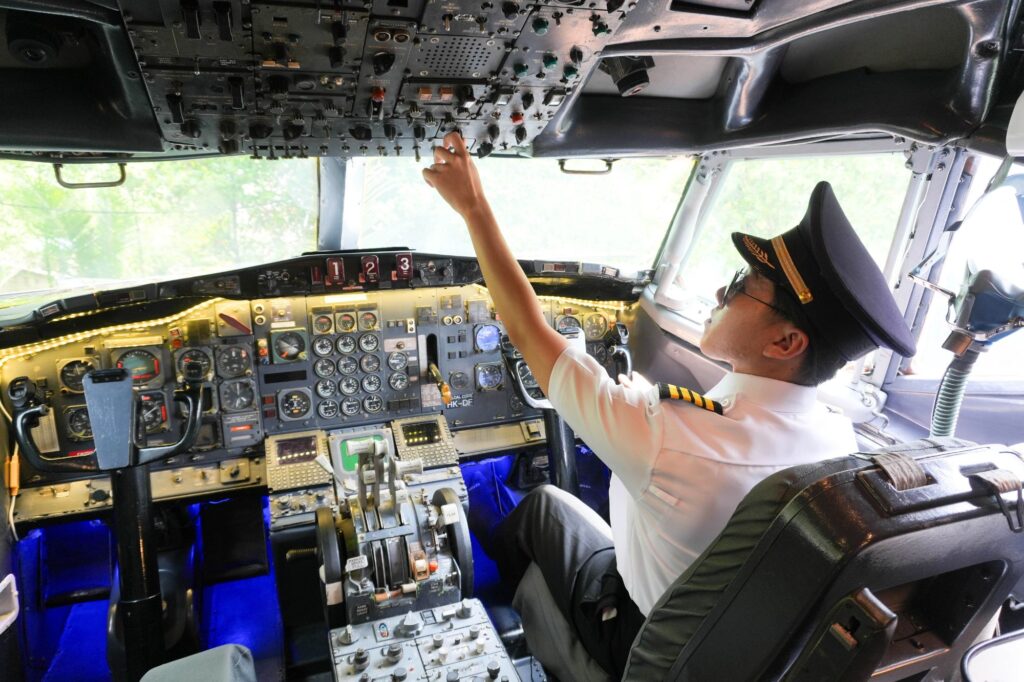
By the 1960s, the ‘Jet Age’ was in full swing. Iconic planes such as the Boeing 727 — the very model we have here at Twin Jets — became the backbone of short-to-medium-haul travel.
Today’s Giants
Modern commercial aircraft such as the Airbus A350 or the Boeing 787 Dreamliner are wonders of carbon fibre and fuel efficiency, capable of flying halfway around the world without stopping.
The Need for Speed: The Evolution of the Modern Fighter Jet
While commercial aircraft grew in size and comfort, military aviation pushed the boundaries of physics.
Breaking the Barrier: The transition from propeller-driven aircraft like the P-51 Mustang to the first jet fighters, such as the Me 262, occurred almost overnight during the 1940s.
Supersonic & Stealth: Today’s fifth-generation fighters, such as the F-35 Lightning II, use “stealth” technology to evade radar detection and can fly at speeds in excess of Mach 1.6 (1,900 km/h). They aren’t just planes; they are flying supercomputers.
The Second Life: Giving Retired Aircraft a New Purpose
Just because an aircraft has reached the end of its flying days doesn’t mean its story has to end in a scrapyard. Around the world, creative minds are breathing new life into these “retired” giants.
As Living History: Museums
Many iconic planes find a permanent home in museums to inspire future generations.
– The Smithsonian National Air and Space Museum (USA): Home to the original Wright Flyer and the Spirit of St. Louis.
– The Science Museum (UK): Featuring the record-breaking Vickers Vimy.
As Dining Destinations: Restaurants
Why eat in a terminal when you can eat in the fuselage?
– El Avión (Costa Rica): A Fairchild C-123 Provider that has been converted into a popular pub and restaurant with jungle views.
– La Tante DC10 (Ghana): A fully converted McDonnell Douglas DC-10 serving local delicacies in the heart of Accra.
As Unique Stays: The Twin Jets Experience
Perhaps the most immersive way to experience an aircraft is to spend the night in one. While global examples like Sweden’s Jumbo Stay (a Boeing 747 hostel) exist, Malaysia has its very own aviation landmark.
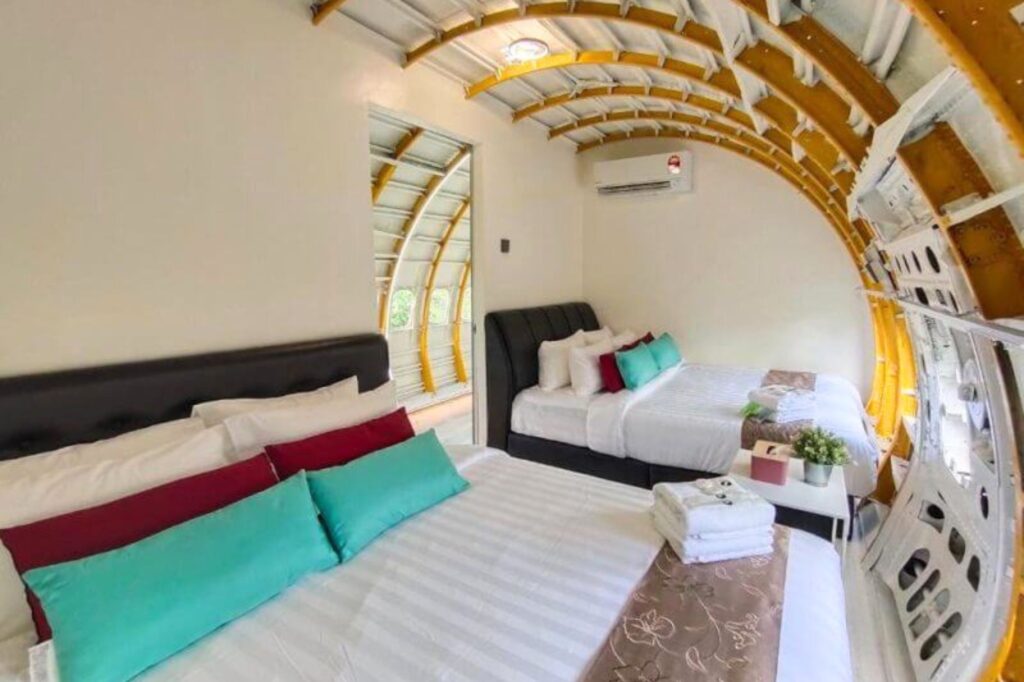
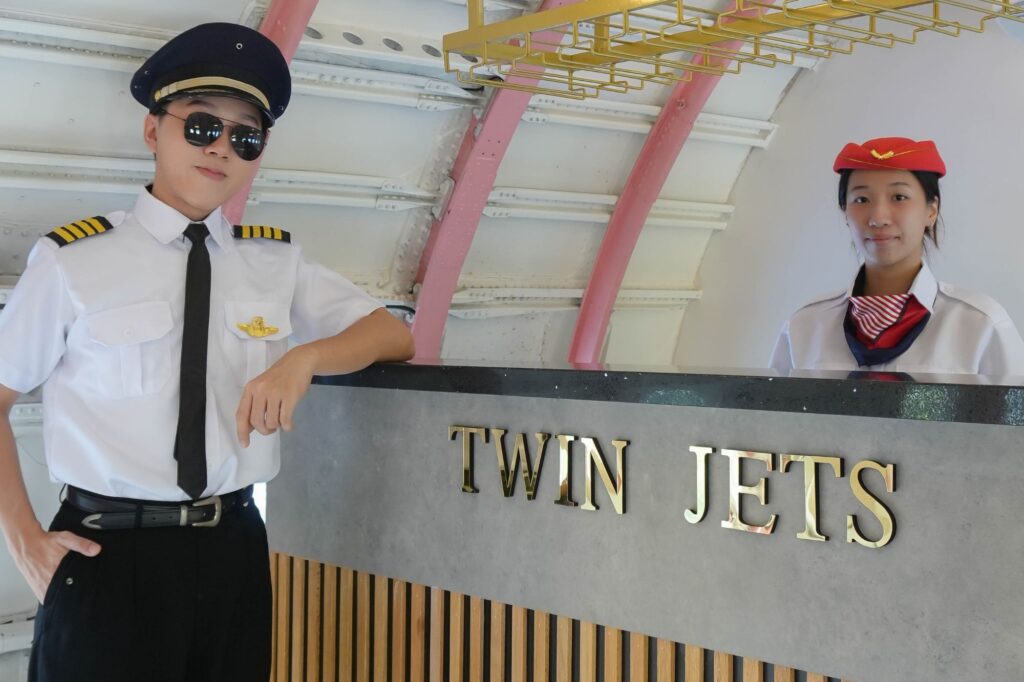
Twin Jets Resort is the first aeroplane resort in Malaysia. We have taken two legendary Boeing 727s and meticulously restored them into premium suites.
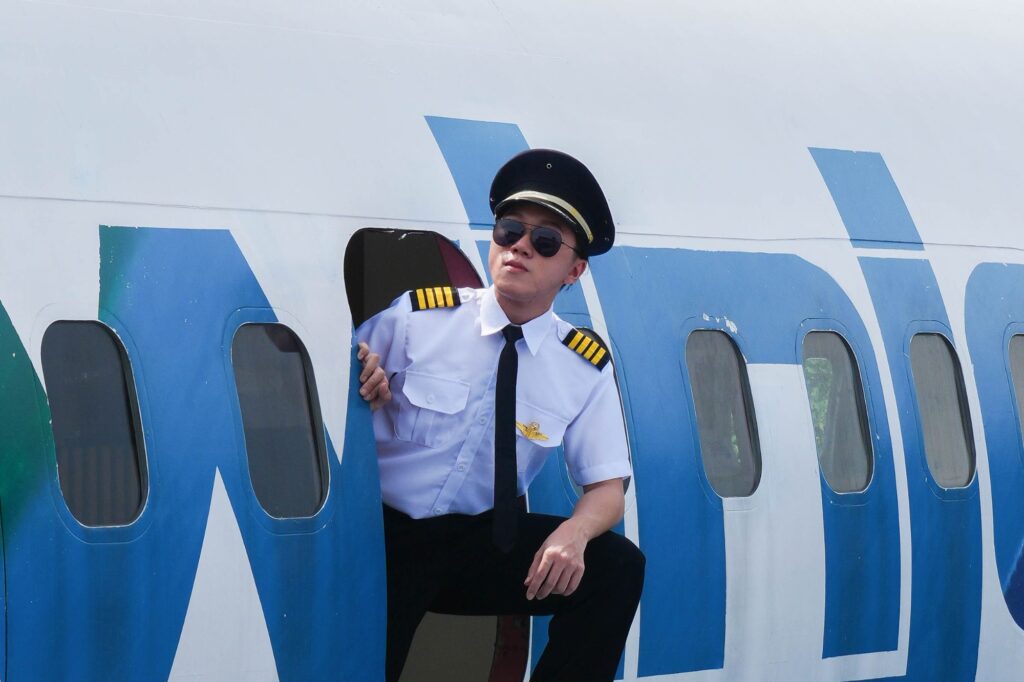
– The Exterior: Preserved to showcase the majesty of the Jet Age.
– The Interior: Redefined with modern fittings, from cosy bedrooms to private living spaces, all while keeping the unique ‘cabin’ feel intact.
Your Adventure is Boarding
From the 12-second flight in 1903 to a relaxing two-day, one-night stay in Broga, the history of aviation is a testament to human imagination.
Are you ready to experience living in a Boeing 727?
Contact
TWIN JETS RESORT SDN BHD
202301051884 (1545798-A)
Address
Lot 4916, Lorong KBB 12/1, Kampung Sri Broga, 71750 Lenggeng, Negeri Sembilan
Individual / Corporate Bookings :
Follow Us